Why You Need an OS for Your Life
Your phone has an operating system. Your computer has one. But your daily life — the most complex thing you manage — doesn't. Here's why a personal life OS changes everything.
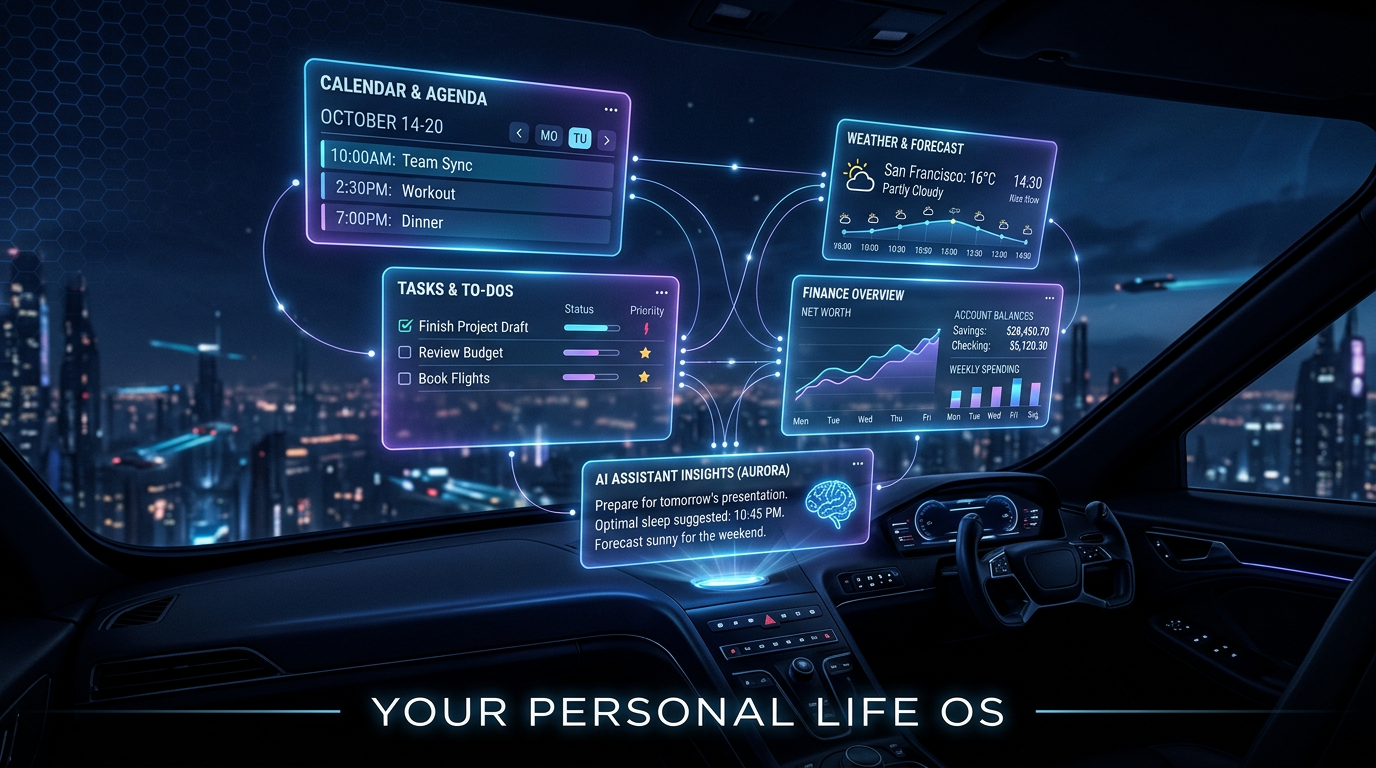
Your phone has an operating system. Your computer has one. But your daily life — the most complex thing you manage — doesn't.
Think about everything you juggle on a typical day: weather checks before heading out, a glance at your calendar, a scan of financial news, task lists across three different apps, meal planning for the week, a quick journal entry, tracking your fitness goals. Each of these lives in a separate app, a separate tab, a separate mental context switch.
The Hidden Cost of Context Switching
Research from the University of California, Irvine found that it takes an average of 23 minutes to return to a task after an interruption. Now multiply that by the dozen or so apps you bounce between every morning just to orient yourself for the day.
You're not just losing time — you're losing the ability to see the big picture. When your tasks live in one app, your calendar in another, your finances in a third, and your goals scribbled in a notebook somewhere, you never get a unified view of how your life is actually going.
What a Life OS Looks Like
Imagine opening a single dashboard and seeing everything that matters:
- Today's weather and whether you need an umbrella
- Your calendar with all upcoming events and commitments
- Your task list prioritized by what actually matters today
- Financial snapshot — how your investments are doing, any alerts
- AI-curated news personalized to your interests
- Your goals and how much progress you've made this quarter
- Meal plan for the week so you know what to prep tonight
That's not a fantasy — it's what a modular dashboard provides. Each piece of your life becomes a module you can add, remove, resize, and customize. You build the operating system that matches how you live.
Modular by Design
The power of a modular approach is that no two dashboards look the same. A day trader sees financial widgets front and center. A parent might prioritize the calendar, meal planner, and shopping list. A student might lean on the to-do list, notes, and countdown timer for exam day.
You're not forced into someone else's idea of productivity. You compose your own.
AI That Understands Context
When all your information lives in one place, AI can actually help. A siloed AI assistant that only sees your calendar can tell you about your next meeting. An AI that sees your calendar and your tasks and your goals and your weather forecast can tell you: "It's raining today so your outdoor run won't work — want to reschedule to Thursday? Also, your quarterly goal review is in 3 days and you're at 72% — here are the two tasks that would push you over."
That's the difference between a collection of apps and an operating system for your life.
Getting Started
The barrier to entry is zero. Start with the modules you already check every day — weather, calendar, tasks — and grow from there. Add a financial tracker when tax season approaches. Drop in a meal planner when you're tired of the "what's for dinner" question. Layer on AI summaries when you want a morning briefing without opening six apps.
Your life is complex. Your tools for managing it don't have to be.